

According to The Hollywood Reporter (I learned the other day), I am “disgraced.” However, in The New York Times and The Wall Street Journal, I am not “disgraced.” I don’t feel disgraced. But let’s get into it.
Who is disgraced? And who should be? If we are going to maintain a disgraced label in journalism, how should it be applied?
“Disgraced” is part of the new journalism where we will not only tell you what happened, we will also tell you how to think about it and generally whom to have grudges against — not in some feckless opinion section, but right in the news stories in line with the facts. So now we label people, and we also editorialize by saying things like “the claim that x is true, which is a damnable lie….” It’s the new way.
If we are going to label people, we can probably agree that people with repeated, deliberate patterns of abuse should be first in line.
But if we generally want to pepper news stories with signposts telling readers where their sympathies should lie, why stop with “disgraced”? There are, after all, many ways to be a disappointing person. What if you carelessly lose a billion dollars? What if you ran a major entertainment company and you were very slow to see the importance of the internet and, later, streaming? (Plenty of those.) What about people who just have terrible judgement, or bad taste, or who are late on their car payment? We could use labels beyond “disgraced,” such as nefarious, boorish, feckless, jejune, portly, short-sighted, or maladroit. Everyone probably lives up to some label.
But this only works well if we have a high level of confidence that our labels are accurate.
How Rigorous is the MeToo Process?
I will use my own story because that is the one with which I am most familiar.
In 2004, I was the first employee on Amazon Video. I drew up the plans, launched the product (with a robust and talented team, of course), then convinced everyone, over much opposition, that we would need original content, created Amazon Studios from zero, hired up the Amazon Studios team, and led it to success. In 2015, I was the Head of Global Content at Amazon Video and the Head of Amazon Studios. We had recently won the Golden Globe for Best Comedy for Transparent, the first Best Series award that went to a streamer. Our plan was coming together. We were growing globally.
The Hollywood Reporter’s “disgraced” label, as applied to me, stems from a brief moment eleven years ago at the 2015 Comic-Con with Isa Dick Hackett, a producer on one of our shows. I had never met her before and, frankly, I did not think of her as an “employee” since she works at her own company in San Francisco.
We had been at a large dinner after the premiere of the pilot for The Man in the High Castle, a TV show based on a novel that Hackett’s father had written. Afterwards, I got an Uber to go to a party a few blocks away. Two people hopped in: an Amazon exec and Isa Dick Hackett. There was party banter on the way that was in line with typical party banter, including some joking about the title of a show we had in development called I Love Dick (it was in active development; the pilot was announced in February 2016).

After the Uber ride, Hackett approached my colleague and me at the party and asked if we were gay.
If that was her takeaway from the evening, then how spicy was it?
She later complained to Amazon that the banter in the Uber was too spicy.
Amazon investigated this at the time, in 2015, with an outside firm. They interviewed everyone at the party and the dinner. They put together all the information and conferred. Amazon has a zero-tolerance policy for sexual harassment; had they found any, I would have been fired then.
But I was not fired.
And bear in mind, Amazon is the only party ever to have had all of the facts — having interviewed everyone who was at the dinner, in the Uber, or at the party.
Let’s stipulate that she was annoyed. Genuinely annoyed, even. But annoyance is not sexual harassment. Except, apparently, in the right circumstances, it can be. Because that is what happened here: a standard nobody announced, applied after the fact, to conduct that the actual standard had already cleared. That is not a rule being followed. It is a rule being made up to fit a result.
Hackett then brought us her next show, Electric Dreams, which we bought.
She also offered us an overall deal with her production company, which we declined.
At the beginning of 2017, everything was going well. The studio was on a roll. We had won the first Best Series Globe or Emmy for any streaming service. We had won the Golden Globe for best comedy two years of the past three. I had a feeling Marvelous Mrs. Maisel would win us a third (it did). We had won the Annie Award for best animated preschool series three years out of the past three. Fleabag premiered and was very well received (it went on to win the Emmy for best comedy). Catastrophe had received a 98% on Rotten Tomatoes. We had just won three Oscars — Screenplay, Actor and Foreign Film —, which were the first Oscars won by a streaming service. We kept winning Best Series Emmys and Annie awards for our animated series such as Tumble Leaf. Every department was winning the top awards in their categories. Our launch and our entry into original content was unquestionably a success and we were on the verge of broadening our selection with The Boys and Jack Ryan.
But then, in October of 2017, just after Harvey Weinstein blew up, Kim Masters interviewed Isa Dick Hackett in The Hollywood Reporter and in this interview, Hackett enhanced her original account with new dialogue. The 2017 article quoted Hackett as saying that I had said “you will love my dick.”
Then I was fired. But that line hadn’t been in the 2015 account, or at least, I hadn’t heard it or been asked about it (and, of course, I would have been).
It was a very bad week to be in the newspapers.
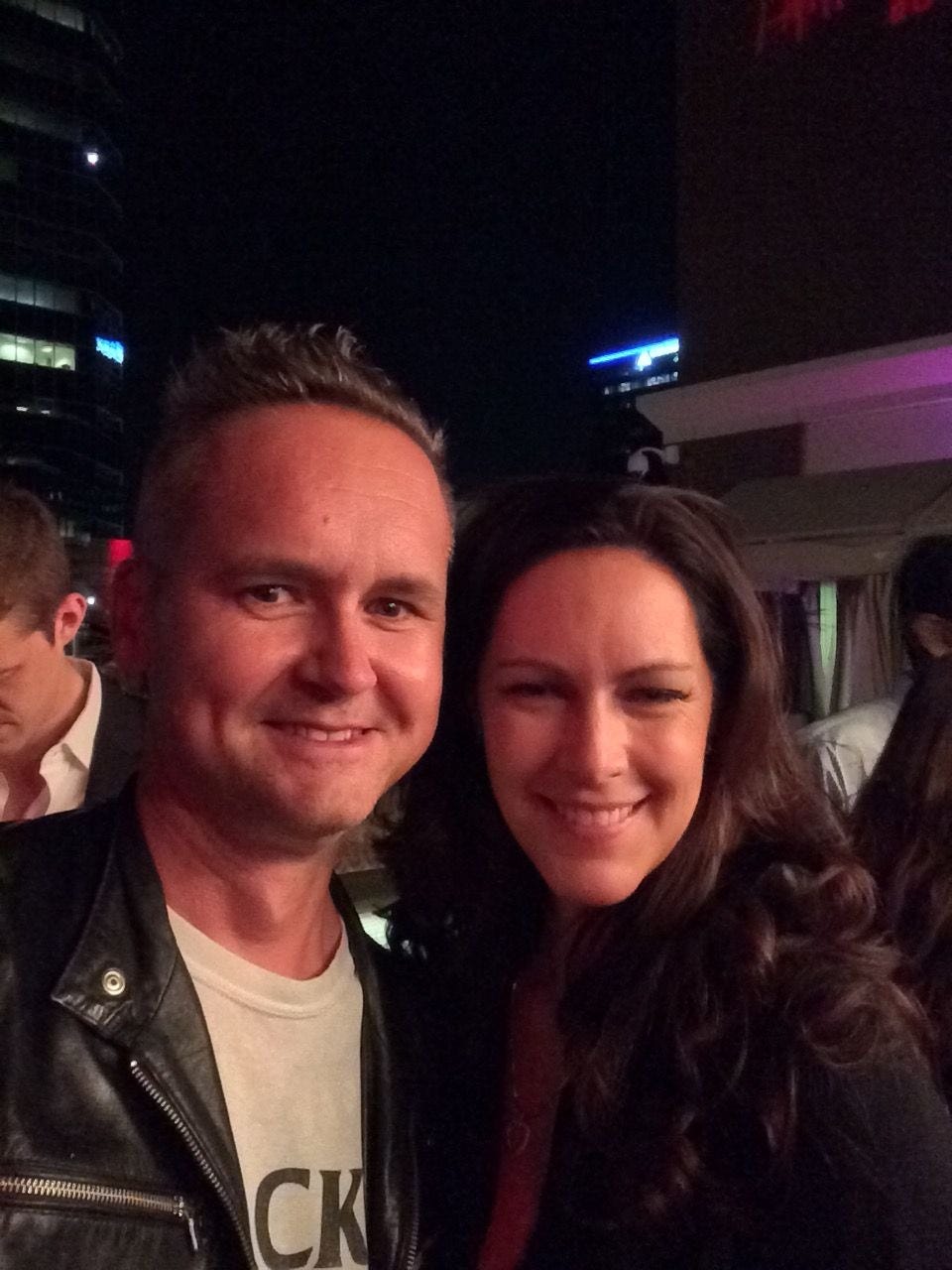
I did not say “you’ll love my dick.” If I had, Amazon would have fired me in 2015. That line does not appear in any 2015 account, nor in the requests for comment Kim Masters submitted earlier in 2017. And our interaction was all witnessed and overheard.
There was never any suggestion that we would ever have sex.
There was never any suggestion that we find a more private moment or that we would ever meet again.
There was microbanter that is typical of parties.
What did I want from her? Nothing. All three times we spoke that evening, she approached me — briefly at the party, getting into my Uber, very briefly at the after party.
I did not make that statement.
To believe that Isa Dick Hackett’s 2017 interview was truthful, and I said “you’ll love my dick,” you have to believe that Amazon would just let the discussion she described slide and then … she herself would do the same, bringing us her next show (Electric Dreams, which we bought) and offering us an overall deal with her company (even though the television world had many well-funded competitors at the time).
To believe my version of events, on the other hand, you have to believe that in the heat of the Harvey Weinstein scandal, Isa Dick Hackett and Kim Masters decided to spice up Hackett’s recollection of our dialogue.
If one is undecided, perhaps we should look at whether there is corroborating evidence. It’s not determinative, but if I am so entitled and inappropriate, wouldn’t you expect this or something like this to have happened more than just this one time? There have been many parties, many Uber rides, many lunches and dinners with half of Hollywood. Where are the incidents? I don’t mean “you parked in my space in 1992” peccadilloes. I mean, shouldn’t there be something similar to what is alleged to have happened here? I worked at very established companies — Amazon, Disney, McKinsey — for more than twenty years without any irregularity.
Or at least wouldn’t you expect that I might have some lurid and busy love life?
Or at least I would have some record of being impolite at work?
In a very ambiguous case, shouldn’t there be something corroborating the idea that we’ve got the right guy?
Because none of that corroborating evidence exists.
Is Kim Masters Credible?
Kim Masters’ temperament and standards for truth-telling should raise concerns. In February 2026, she posted the following on Threads:

Several things about this. The story is false. I never received any such gift, nor anything resembling it, from anyone, ever, and I had never heard the claim before she posted it nine years after it supposedly happened.
“I was told.” By whom? On what basis? I presume that this gift was not given to me at my actual birthday party, where there would have been fifty witnesses. So whoever this source is would have to (a) be close enough to me to know what arrives at my home (that could be only one person) and (b) also have been close to Kim Masters in 2017. No such person exists.
Either Masters is fabricating this — which I find completely credible — or her standards for anonymous sourcing are unbelievably loose. Either explanation is disconcerting.
Let me put the challenge directly. Ms. Masters: what color was the frame? Approximately what size was the photograph? When did this alleged gift arrive at my home, and by what means? Did I display it somewhere? Who was the woman in the photograph? Was it a color photo or black and white? Any of these details, if real, should be easy to provide. I will guarantee now, in advance of any response, that no credible evidence in support of this story will ever materialize — because the event never occurred, and nothing remotely resembling it ever occurred. Someone here is telling tall tales.
When Masters shopped her original article about me in 2017, it was rejected by The New York Times and other publications — and initially by The Hollywood Reporter itself — before THR eventually ran it. That is the bar her reporting cleared.
I am not certain that if we were to pick one person to sit in judgement over other people that it would be Kim Masters. She seems to have a particularly strong resentment of men.
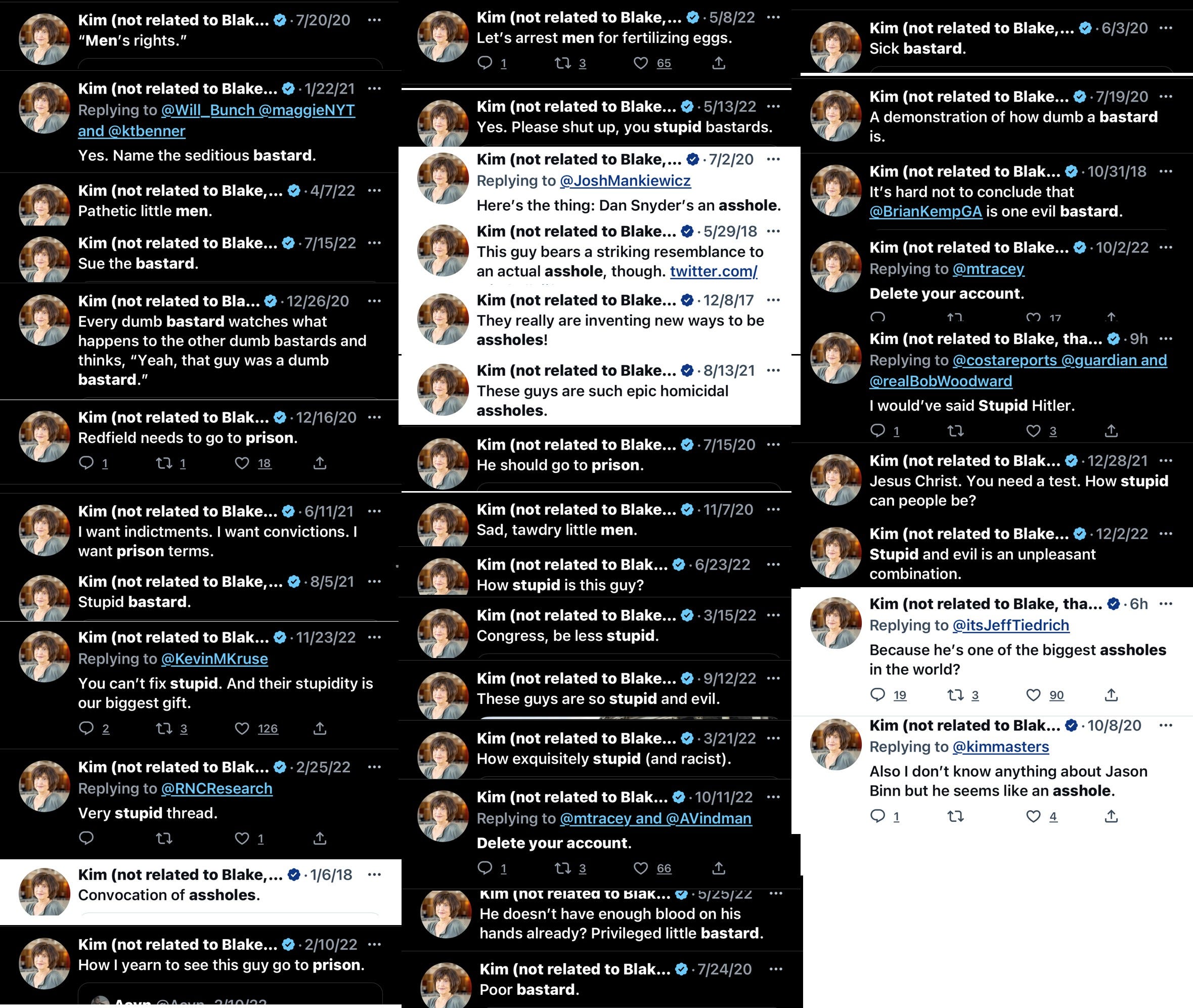
In the law, we know that people are flawed. Judges and jurors and prosecutors have substantial responsibilities in the legal system, and since they can be flawed and might occasionally be operating with bad motives, the system has checks and balances. Judges can be overturned on appeal. We have twelve jurors, not just one, and they must come to a unanimous finding (in criminal cases). Litigants can strike jurors who seem biased. Prosecutors must operate within clear rules designed to promote fairness. Defendants are provided with counsel. And the system still fails. People are falsely convicted of crimes and exonerated years later, if ever. But in journalism, we rely on individual journalists working with one editor, typically, to exercise a very similar degree of power over people as our legal system. What if a journalist has a bad day? Or is fundamentally a bad person? Not only do we not have substantial checks in the journalistic process, but many states including California have made libel cases almost impossible to win with what are called anti-SLAPP laws. Our system is very, very loose.
What about The Hollywood Reporter?
Zooming out from Kim Masters, where is the bar for fact-checking at The Hollywood Reporter in general?
Well, let’s look at this article “Roy Price Has a Very Different New Career After Amazon Studios Ouster", on January 4, 2019. The article reported that I had become “an art dealer in Hong Kong.”
I have never in my life been an art dealer, in Hong Kong or elsewhere. I have never sold any work of art to any person or entity. I have never had any sort of retail business, or an art consulting business. I don’t think I have ever spent more than half an hour in an art gallery. And I don’t know much about fine art.
I did have a company called International Art Machine. But that is because I think that movies and television are “art”. I take it that Chris Gardner just guessed based on the name of the company that it was an art gallery.
But guessing is not journalism.
Suffice to say, this story would never have made it into print at the New York Times or The New Yorker because they have diligent fact checkers. But that’s The Hollywood Reporter for you!
There Were Two MeToo Movements
There were really two MeToos. The original was the work of journalists who upheld evidentiary standards — Ronan Farrow at The New Yorker, Jodi Kantor and Megan Twohey at The New York Times. Their reporting on Harvey Weinstein was meticulous, sourced, and verified.
As they say, “never let a crisis go to waste.” And as Anne Applebaum explained from a more general point of view in an essay on MeToo and the New Puritanism, “Once it becomes clear that attention and praise can be garnered from organizing an attack on someone’s reputation, plenty of people discover that they have an interest in doing so.”
Out of the legitimate version of MeToo a shadow movement emerged, the corrupt twin of the original. Shadow MeToo borrowed legitimacy from evidentiary journalism but abandoned its standards. I don’t think it is unfair to say that Shadow MeToo was a power grab. TimesUp, in fact, had explicit job goals.
To capture as many high level jobs as possible, the corrupt version of MeToo needed evidentiary standards to be low and it needed every story to be believed. Jaywalking needed to be treated like murder.
These are not standards that people will naturally embrace, so to get people to toe the line, the leaders of the movement severely punished anyone who questioned the new methods. In 2017, Lena Dunham expressed support for a colleague she knew well, against an accusation she had reason to doubt. Within days, she was attacked, forced to recant, and was semi-cancelled. The lesson was unmistakable: the corrupted MeToo required its participants to suppress their own judgment when that judgment did not align. Some bad things had to be done. People had to be taught not to speak up.
Obviously, I was a target because I had built and was running global content at one of the two largest streaming services in the world. The other was Netflix. Both had been created by men, and both were being run by men. To some, it was important to change that, and MeToo was the available tool.
Don’t take it from me. Hackett herself, in the 2017 interview, framed her motivation in exactly these terms: she called for “an infusion of new and diverse leadership, not just including women but gay people, people of color, people with disabilities.” In her telling, her account and the broader project were not two separate things.
You can have the legitimate MeToo without the shadow MeToo. But you cannot have the shadow MeToo without the legitimacy conferred by the legitimate MeToo. It is not necessary to take them both as a piece.
“But Still, It Had to be Done”
Some people will go along with most of this and still land on: yeah, but. Yeah, but it still needed to happen. Yeah, but the good outweighed the bad. Yeah, but if a few people got hit who didn’t deserve it, that’s the cost of fixing something.
Imagine a district attorney. Say she won four hundred convictions last year. Great year. But she knows that 100 of those people didn’t do it — and she’s fine with that, because she doesn’t much like the type of person she indicts. Nobody would call that a good year. People would call it a scandal. The convictions aren’t the story. The system and the corruption are the story.
When people think that despite its flaws, MeToo was on the whole worth it, they are usually thinking one of three things.
At least it cleaned house. The argument here is that whether the accused did what they were accused of or not, it got rid of a lot of bad people. I’d push back on that quite a bit. Many of Hollywood’s worst and most malevolent people are still thriving and even benefited from MeToo, so at best the system was wildly inconsistent at accomplishing this mission. And meanwhile, perfectly normal people got caught up in it. This is a very mixed bag.
At least it centered women. Let me just speak to what I know best, which is Amazon Studios. The theory is that the old Hollywood was holding women down and the correction set them loose. But the studio I built didn’t need correcting on this. It already was the thing everybody said they wanted. Half the Amazon Studios team was women. Most of our overall deals were with women. We required half our comedy directors to be women when the industry was sitting around seventeen percent — and we won the Best Comedy Director Emmy four years out of five. Our highest-paid producer ran a company whose actual slogan was “topple the patriarchy.” Transparent, Mrs. Maisel, Fleabag, Catastrophe, One Mississippi, Good Girls Revolt — those weren’t shows that happened to have women in them. They were shows with a point to make, and they won. If there was a more feminist studio running in those years, I’d honestly love to know which one it was. So the story where the movement shows up to free that studio by removing the guy who built it — that story doesn’t survive five minutes with the actual record. Over the next eight years the studio won a lot less, stood out a lot less, and didn’t get visibly more diverse in terms of who was running the shows.
At least it was good for women on the whole. Regular Metoo was good for women on the whole. But to say the same of Shadow MeToo is not an easy case to make. The weak MeToo cases sent the message that being in 1:1’s with a woman — or in any context where you could plausibly have said something — is high risk. Most businesses, unlike entertainment and publishing, are not dominated by women. So look at the whole economy, not just Hollywood: the senior male now weighing whether to mentor a junior female, or put her on the big project, runs a calculation he didn’t run in 2016. On the whole, unless you limit your view to showbiz, I doubt that Shadow MeToo will prove to have been professionally helpful to women.
Am I saying that MeToo as a whole should be cancelled? No. The original MeToo, or Core MeToo — the real reporting, sourced and checked, that took down people who actually did what they were accused of — works and suffices. I’m saying that the Shadow MeToo should be abandoned. It imposes heavy costs and gets little that couldn’t have been had by following the rules.
The Fork in the Road
With respect to me, I am not asking anyone to let anything slide. I don’t want anyone to let anything slide. My argument is that (a) I did not in fact do this thing at all, and (b) despite the temptation to do so, in ambiguous cases, and especially in doubtful cases, we should not proceed to guilty verdicts.
Often we look back in wonder at the various ridiculous things people believed in distant times. Sometimes I wonder what mistaken belief or convention from our time will baffle future observers. And I think one such belief is this system: that we should accept all accusations as being 100% true, that we should accept no testimony from the accused, and that we should have no cross-examination, and yet we should have severe consequences associated with this extra-judicial process.
In my view, Kim Masters and Isa Dick Hackett should be “disgraced” for bearing false witness.
I, on the other hand, told an awkward joke at a party once eleven years ago.
Is this the standard we want?
Roy Price founded Amazon Studios and Amazon Video. His shows have won 14 Emmys and Golden Globes for Best Series. He holds 16 patents. Previously at McKinsey & Co. and The Walt Disney Co. He is currently building N1BW.
Look a little closer, and you’ll find that there was, in fact, only one MeToo movement.
The point was to abrogate due process for the enemies of the movement, and to reduce the burden of proof for claims made by members of said movement.
The idea that this was “necessary” is based on hysterical, specious arguments, which “just be a good person” libs were cowed into accepting.
E.g., the claims that Western society has always been deeply unfair to women, that women were routinely assumed to be liars by law enforcement prior to 2015 (except for when the accusations were leveled against non-whites, apparently, in which case women were always believed), and that sweeping changes to law and culture were necessary to remedy this.
Not surprisingly, these revelations came to light around the same time that women started to outnumber men in the workplace, the media, and the academy. Wow. Crazy coincidence.
As a result, we got “believe all women,” the elimination of statutes of limitations for crimes most likely to affect women, contemporaneous hearsay re-categorized as viable evidence (E Jean Carrol, Blasey-Ford), and, my favorite, the phrase “credibly accused of sexual misconduct/assault” introduced into the public lexicon.
That last one is really something: you’re presumed guilty if a woman that the press finds credible says you’re guilty. The ladies are judges and lawyers in large numbers now, so 800 years of Anglo jurisprudential tradition are just gonna have to take a backseat. “You’re not a bigot, are you? A misogynist?”
None of this was in any way necessary. Not to prosecute Mean Bad Harvey, nor to prosecute anyone else who’d broken the law. The pre-2015 standards of evidence were sufficient. Neither trial-by-press, nor trial-by-HR, nor trial-by-Title IX Office have delivered a more just society. Quite the opposite.
It was, however, necessary for giving angry women and envious/weak men the power to oust their male competitors from positions they’d prefer to have for themselves or their friends, and for enabling petty, vengeful people to extract punishment for the high crime of failing to be sufficiently deferential.
All of the due-process destroying innovations of the MeToo era should be reversed, tomorrow. The people responsible for implementing them belong in a gulag—though I’d settle for a Waffle House kitchen.
Do not be a coward. Do not bow and scrape before the people who demand that you say MeToo was “necessary.” There is no fair, happy mid-point they will allow you to negotiate. They will always come back for more, and the truth means nothing to them.
This article is persuasive. It makes falsifiable claims. It employs logic. It takes into account and addresses plausible alternative hypotheses. It considers the mindset of the protagonists without making excessive claims about other people’s mental states. It’s almost old-fashioned in this sense. It’s striking how unusual that is these days.